
Inwood in Manhattan’s northernmost tip, has long been a working-class neighborhood with a mix of cultures that shifted to Dominican in the 1970s.
“This neighborhood has people who are working hard all the time,” said Lucia Perez in Spanish. She moved to Inwood 42 years ago and enjoys the park spaces and tight-knit community, “I love it here.”
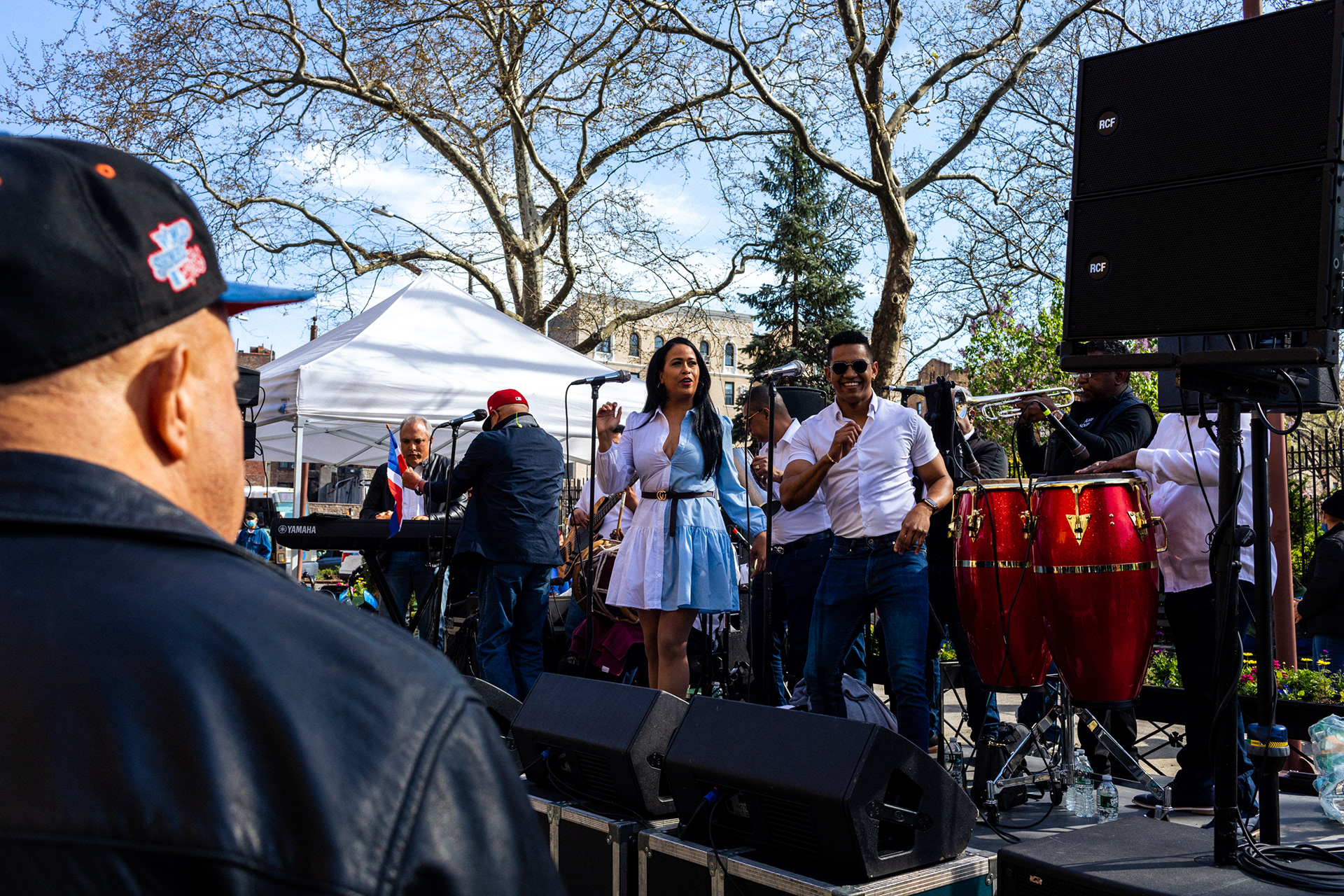
A performance at the renamed Quisqueya Plaza on Dyckman Street.
The neighborhood’s ample park spaces, moderate rent, and relatively easy downtown commute haven’t gone unnoticed as Inwood has seen an influx of middle-class residents in recent years.
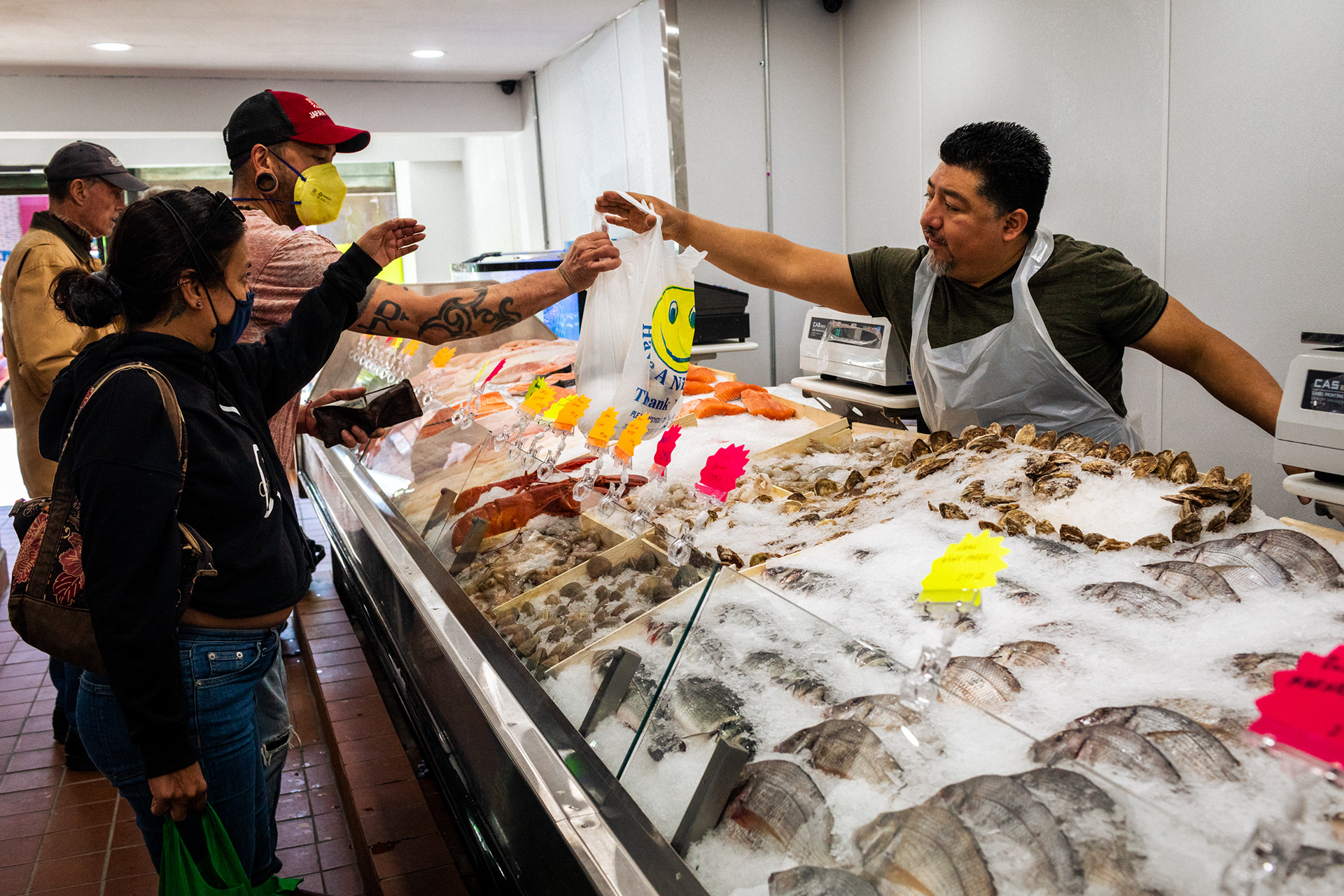
Luciano Ramirez sells fish at his newly opened Branzino Fish Market on Broadway. Before agreeing on the space for his shop, Ramirez said he never really got to know Inwood despite living in the Bronx for more than two decades, “I love this neighborhood. Everybody is so welcoming to me,” Ramirez said.
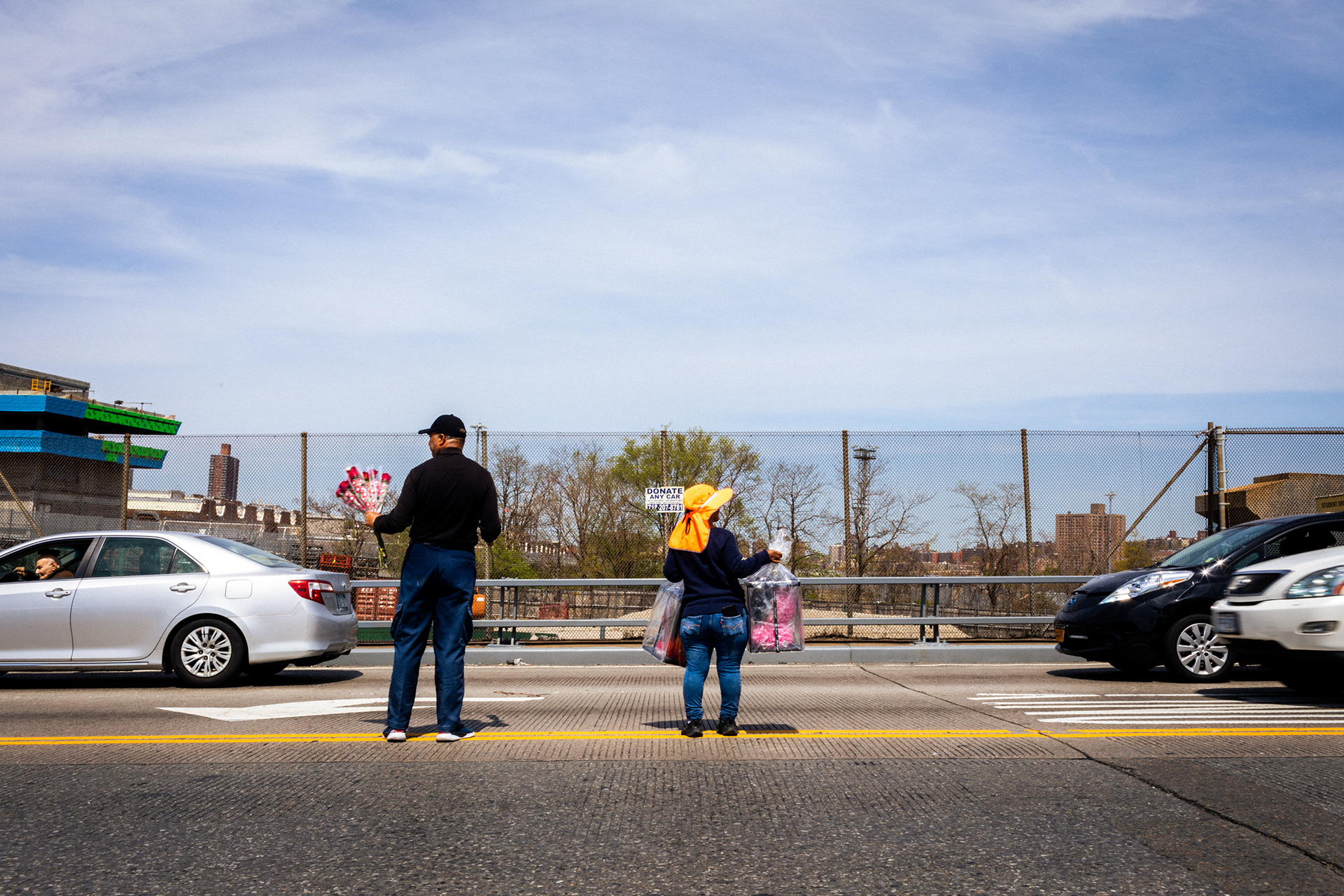
Street vendors selling on the University Heights Bridge entering Inwood at 207th Street.
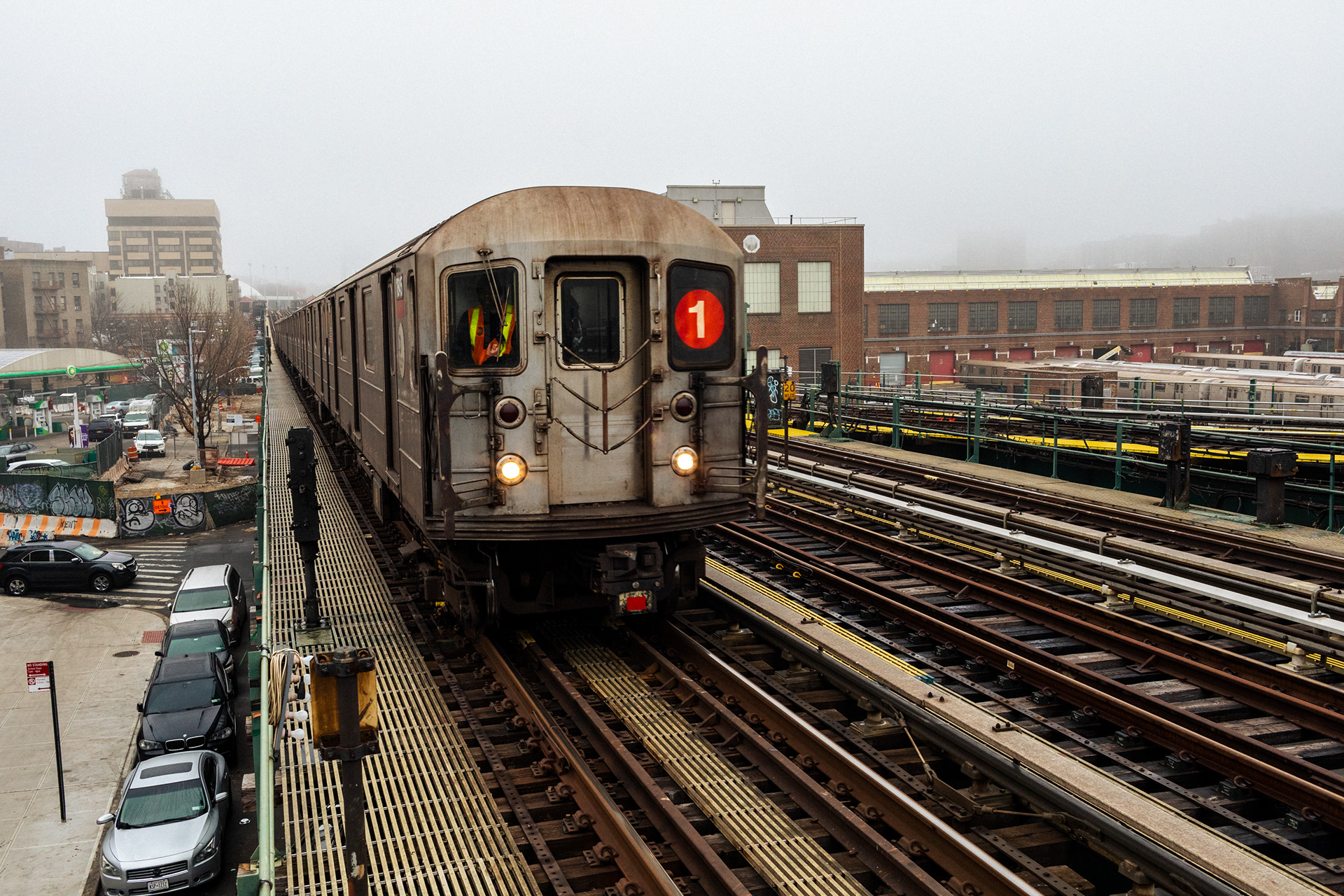
The Southbound 1-train rolling into the 207th Station in Inwood.
Inwood landlords have begun raising rents or refusing to address apartment issues like dealing with rat infestations, putting pressure on tenants to leave so they can raise apartments’ rents closer to the market rate. “They're not investing in their properties anymore,” said Maria Magdalena Duarte, a tenant organizer with the Met Council on Housing, “They're literally letting their properties fall apart.”
Duarte works in multiple Inwood buildings and described tenants calling her, desperate for guidance because their landlord was unresponsive. “These tenants are forced to live in these terrible conditions because they can't afford to move somewhere else,” Duarte said, “The level of dehumanization that is used in these tactics is unreal.”
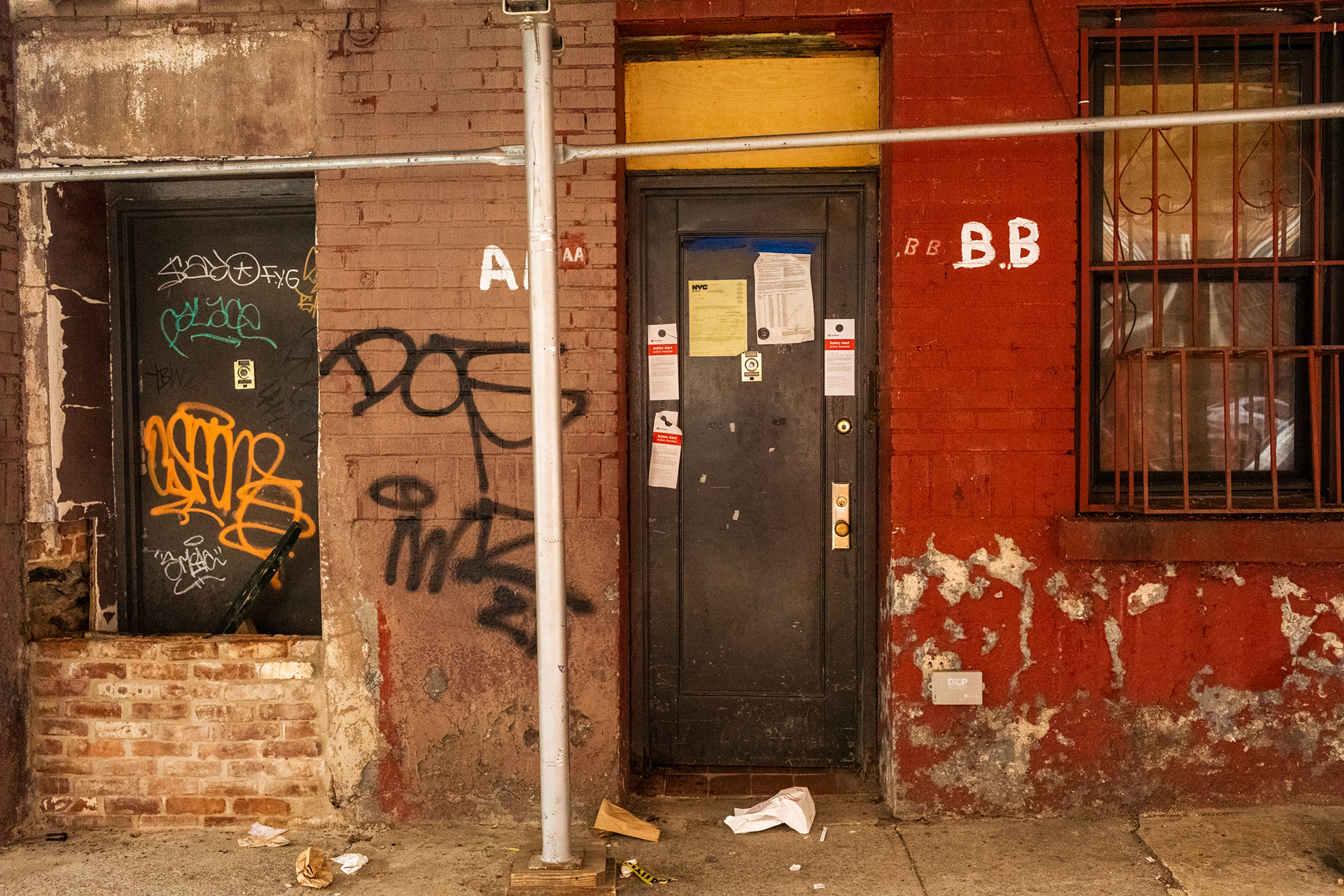
An electrical fire in January 2021 left the residential building at 74-78 Post Avenue uninhabitable for many of its residents. The residents are suing the landlord, claiming he tried to use their displacement to his advantage by pressuring tenants to leave so he could renovate and rent at the market rate. The building was shut down to everyone after another fire during the 2021 Thanksgiving holiday.
Now that the city has rezoned Inwood to include high-rise buildings, these situations have
increased. “They have a plan for the neighborhood. It’s one of the last remaining affordable neighborhoods,” said Baez, who co-founded the Dyckman Run Club in part to showcase Inwood’s vibrancy. “We still have culture—it’s hanging on a thread.”
According to its documentation, the city’s “Inwood Action Plan”, introduced in 2016, seeks a “comprehensive plan to ensure that Inwood remains an affordable, attractive neighborhood for working and immigrant families.”
Included in the initiative started by the New York City Economic Development Corporation and spearheaded by Inwood’s councilman at the time, Ydanis Rodriguez, are things like renovations for streets and parks, additional funding for schools, the reconstruction of the Inwood Public Library, and, most notably, rezoning the areas east of 10th Avenue, north of Dyckman Street to replace auto and wholesale shops, and empty lots with high-rises, some of which will contain affordable housing.
In 2018, City Council approved the rezoning. Shortly after, the organization Inwood Legal Action filed a lawsuit that alleged the city failed to perform due diligence in analyzing the risk of displacement for current Inwood residents under its rezoning proposal.
After a judge overturned the rezoning in 2019, the plan was reinstated the following year, and building construction is currently ongoing.
Activists and advocates say the positive aspects of the plan do not adequately address the community's needs. They are calling for a more collaborative community approach to rezoning as they fear the city’s plan has led to rising costs and rent, increasing the displacement of Inwood’s working-class population.
Perez said many of her friends and neighbors moved out of Inwood in recent years for less expensive places like the Bronx and Philadelphia as rents in Inwood rose. “I want to stay,” said Perez in Spanish, “this is my community.”
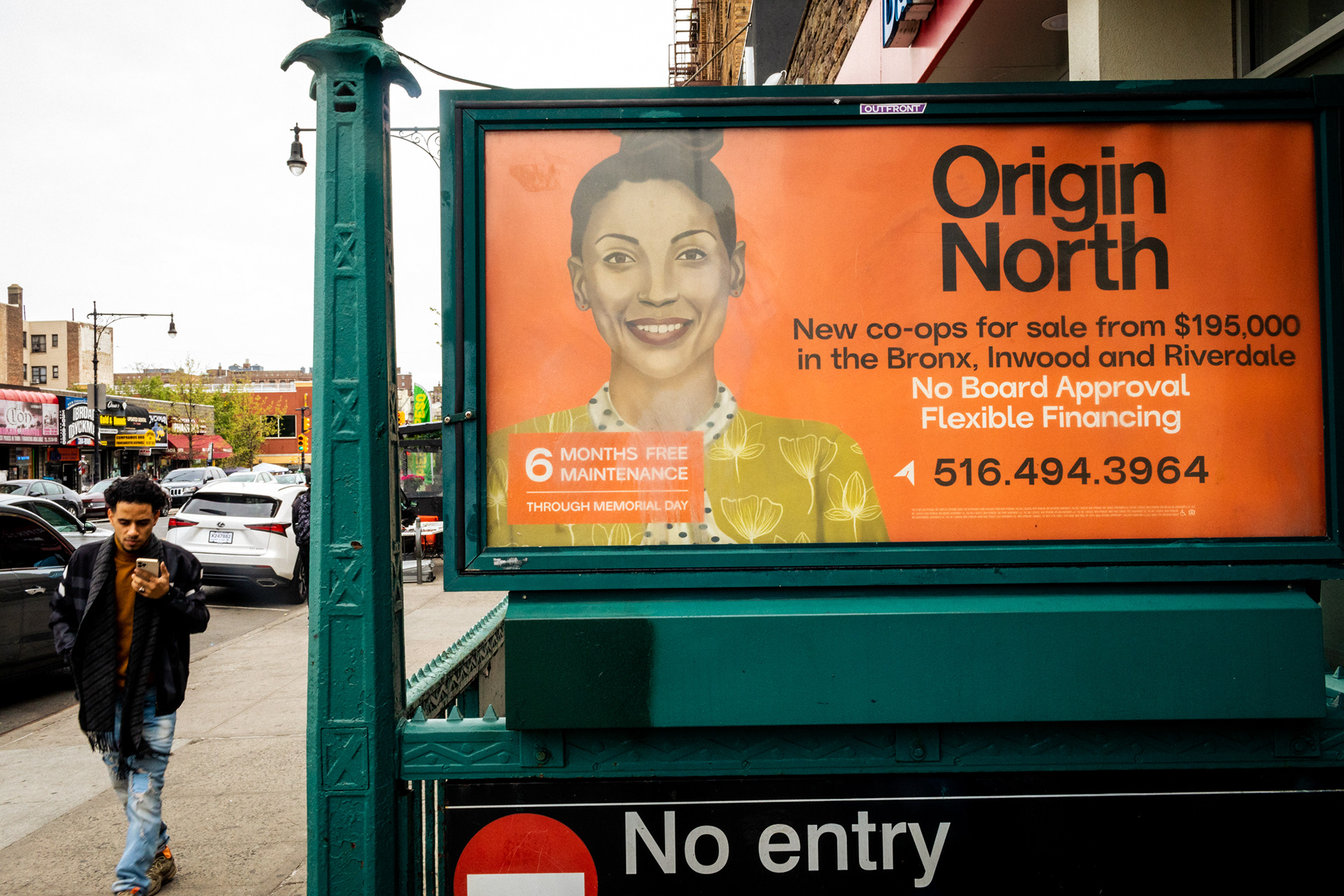
In recent years real estate companies targeting young professionals have turned their attention to Inwood.
Many of the early meetings to develop the rezoning plan lacked sufficient resident representation, said Dave Thom, an Inwood resident and civil engineer who attended those meetings. “Whenever community members would speak in public meetings, there was a benefit,” said Thom.
n response, residents, activists, and organizations in Inwood came together to form Northern Manhattan Is Not For Sale (called “Alto Manhattan No Se Vende” in Spanish), a coalition of primarily Inwood-based community members and organizations. NMNFS focused on rezoning-related issues like the displacement of residents and small businesses due to increasing rent and the probable burden additional residents would have on the neighborhood’s infrastructure.
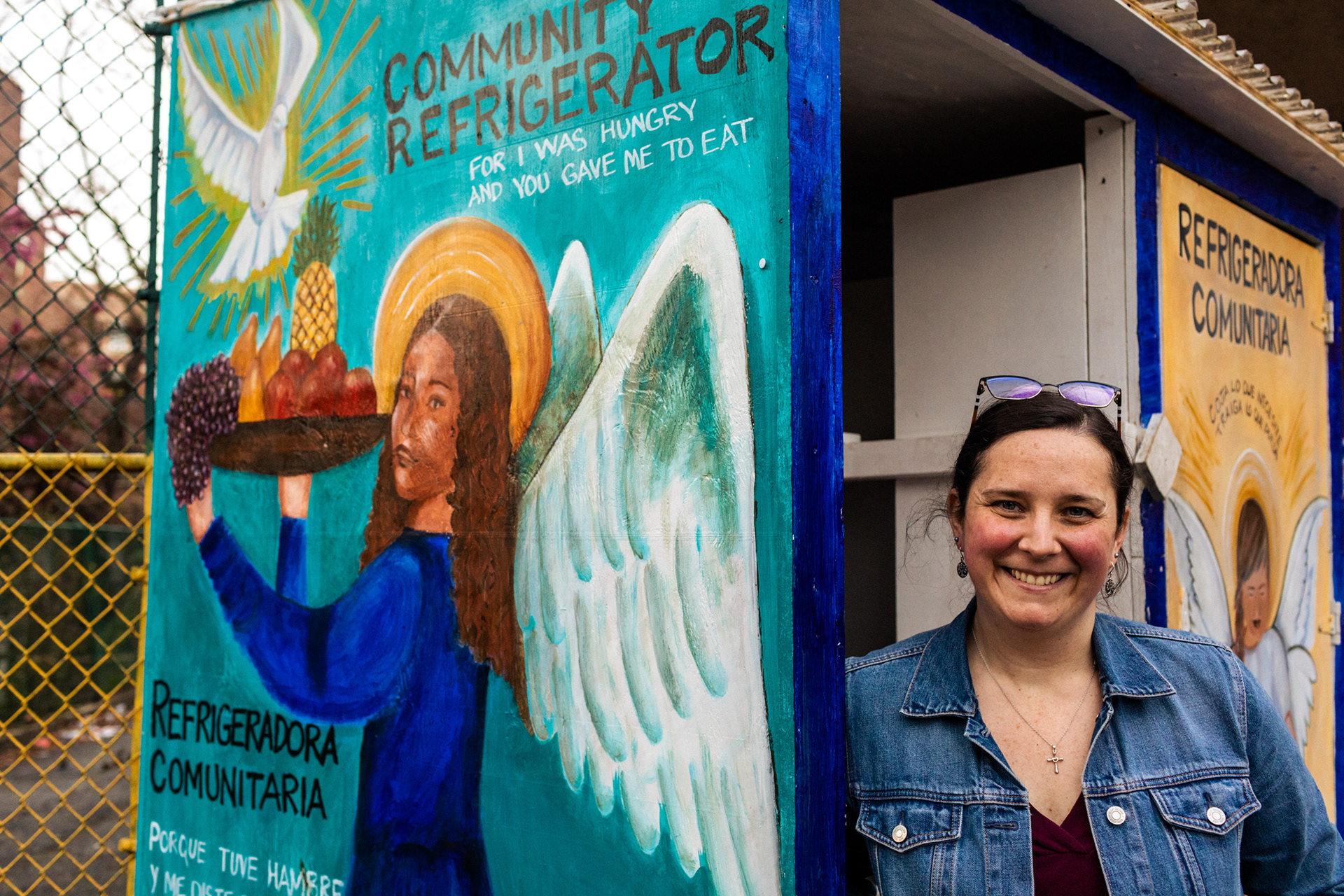
Tiffany Lee helped organize across three Inwood churches. Lee's organization, Altagracia, opened a community refrigerator on the north side of St. Jude's Church.
“We really dug into the meat of the (rezoning plan) to understand what the city meant by affordable housing,” said Tiffany Lee, the Executive Director of Altagracia, a faith-based organization that worked closely with NMNFS. “Well, affordable for whom?”
The city bases affordability on average median income (AMI), which is calculated by the U.S. Department of Housing and Development for selected regions. New York City’s AMI is $133,400 for a four-person family.
In Inwood’s case, new housing developments would require at least 25 percent of the new apartments to be affordable at 60 percent of the average median income (in 2022, that is $80,040 per year for a family of four).
Or developers could provide 20 percent of housing at 40 percent of AMI ($53,360 per year for a family of four).
According to US Census data, in 10034, the zip code in which affordable housing is planned, the current median income for a family of four is just under $56,000.
“We know what the city considers affordable, and it isn’t true to the current rate,” said Andrea Shapiro of the Met Council on Housing. Shapiro is concerned that the city’s affordability is too high for current residents and will raise rents across Inwood, pushing out the working class. “We’re going to be losing the character of the neighborhood.”
NMNFS hosted community forums and workshops on tenants’ rights in churches and community spaces around Inwood that educated and activated community members. The coalition of groups regularly attended community board and city council meetings and often held demonstrations and protests.
“We marched through the streets,” Perez recalled. Another protest included a takeover of Councilmen Rodriguez’s office the week of the city council’s rezoning vote.
In 2018, NMNFS and other organizations and volunteers drafted the “Uptown United Platform” and submitted it to the city council. The document cataloged problems with the city’s plan and made suggestions for developing a more community-centered rezoning process.
The UUP states, “rezoning that does not address our community’s needs. ‘Inwood NYC’ is a plan for
hyper-gentrification that would have long-term destructive impacts on our neighborhood.”
hyper-gentrification that would have long-term destructive impacts on our neighborhood.”
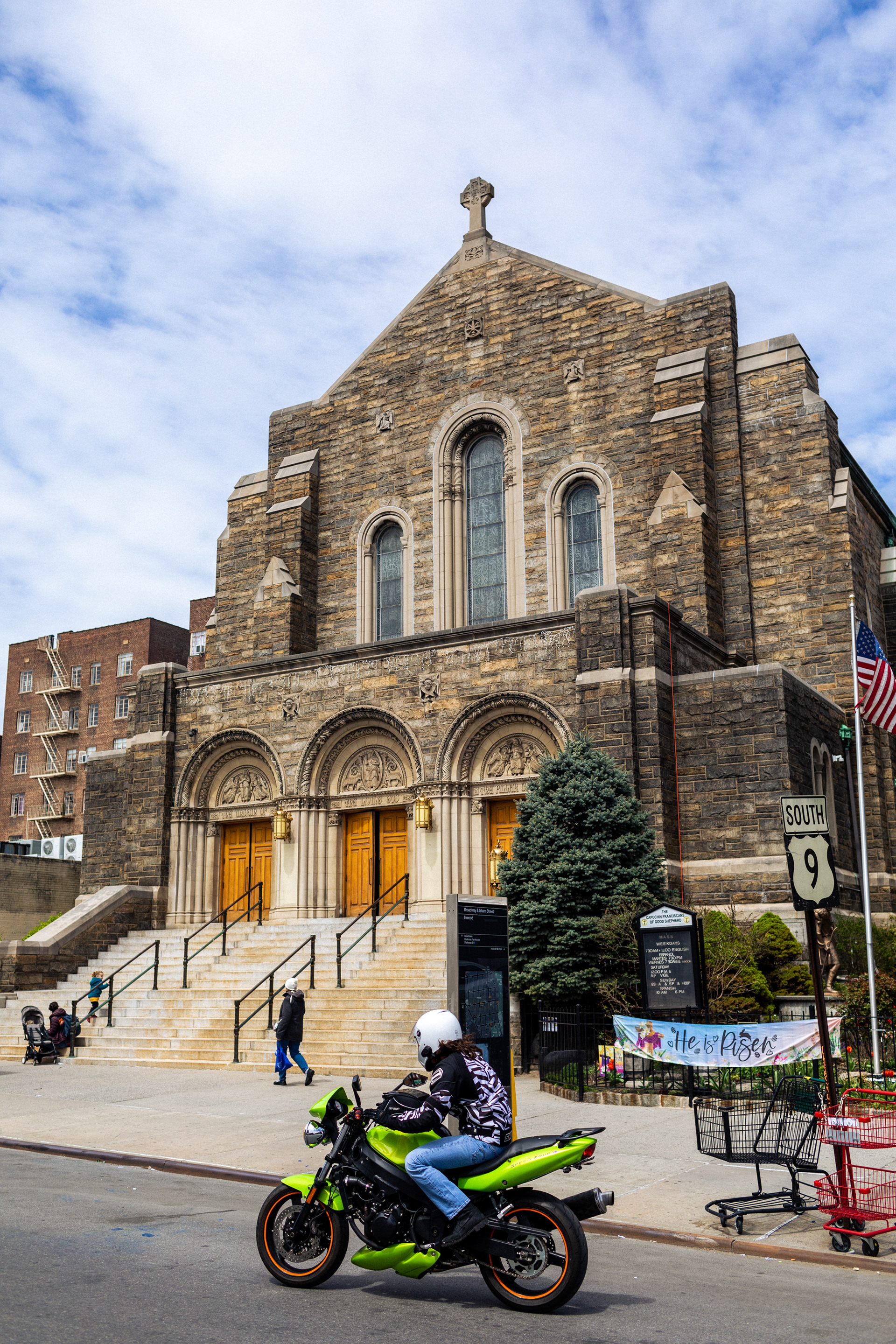
Churches like The Church of the Good Shepherd on Broadway provided regular meeting spaces for Northern Manhattan is Not For Sale
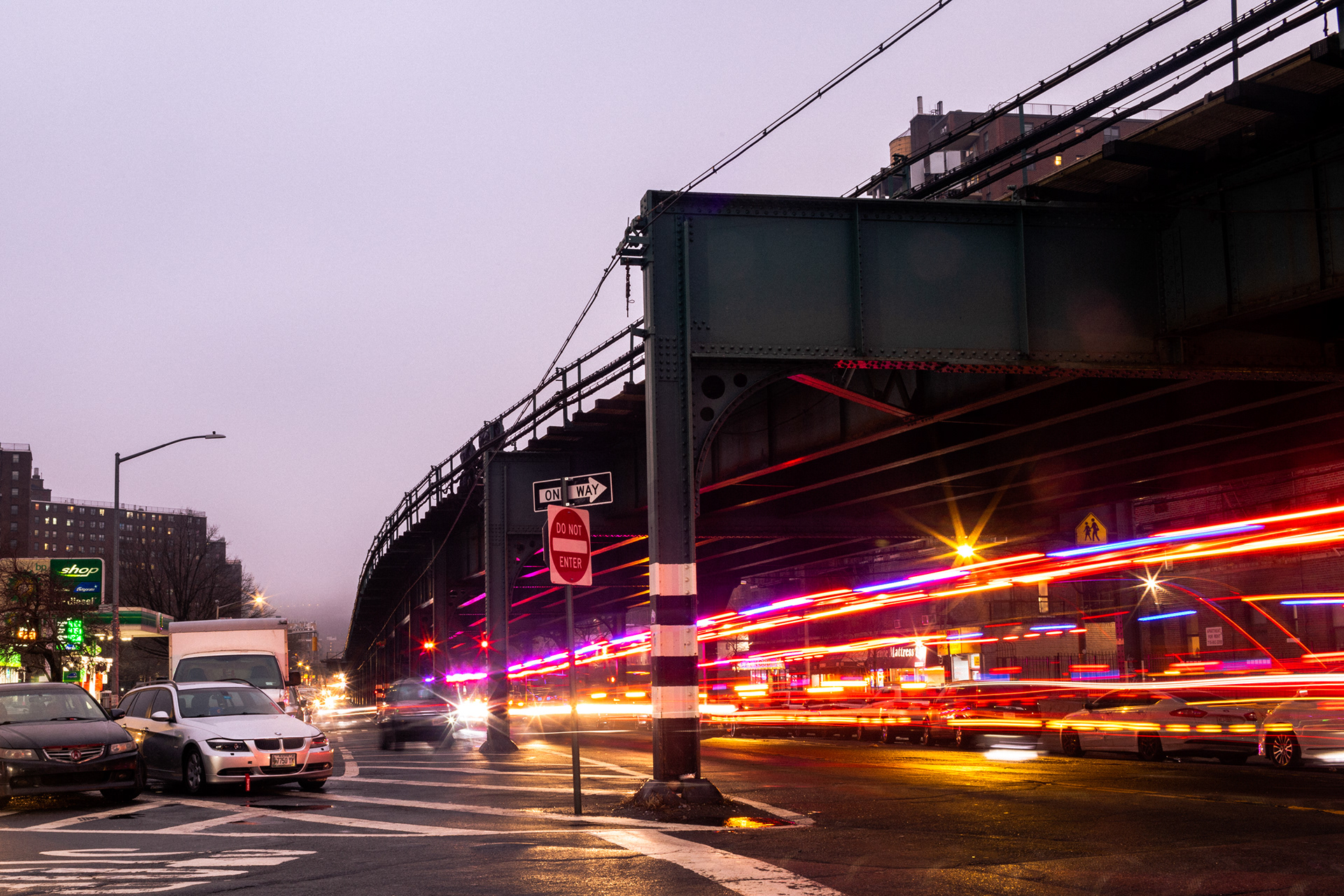
10th Avenue under the elevated 1 subway train. The Uptown United Platform expressed concern over emergency response times with the expected increase in traffic.
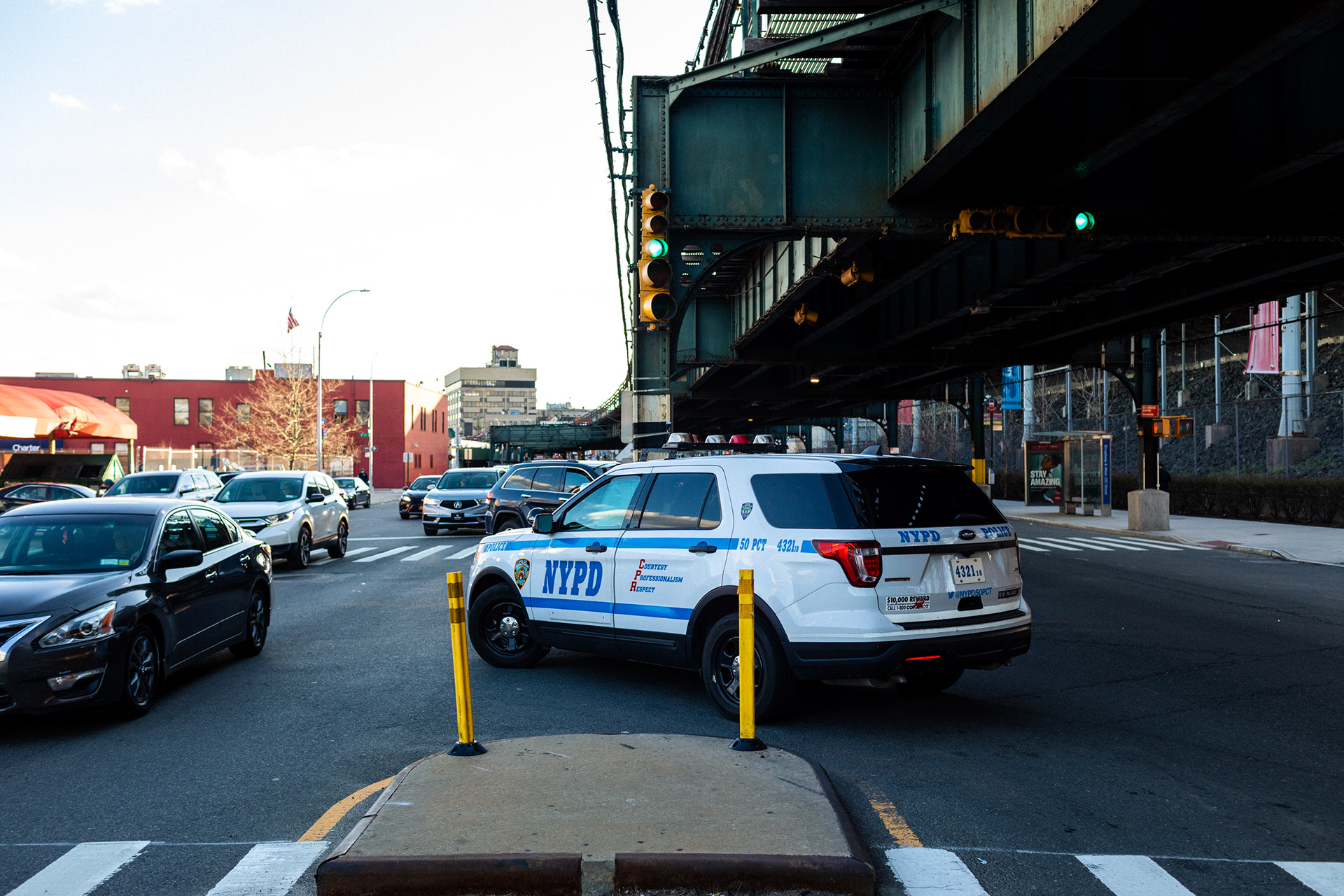
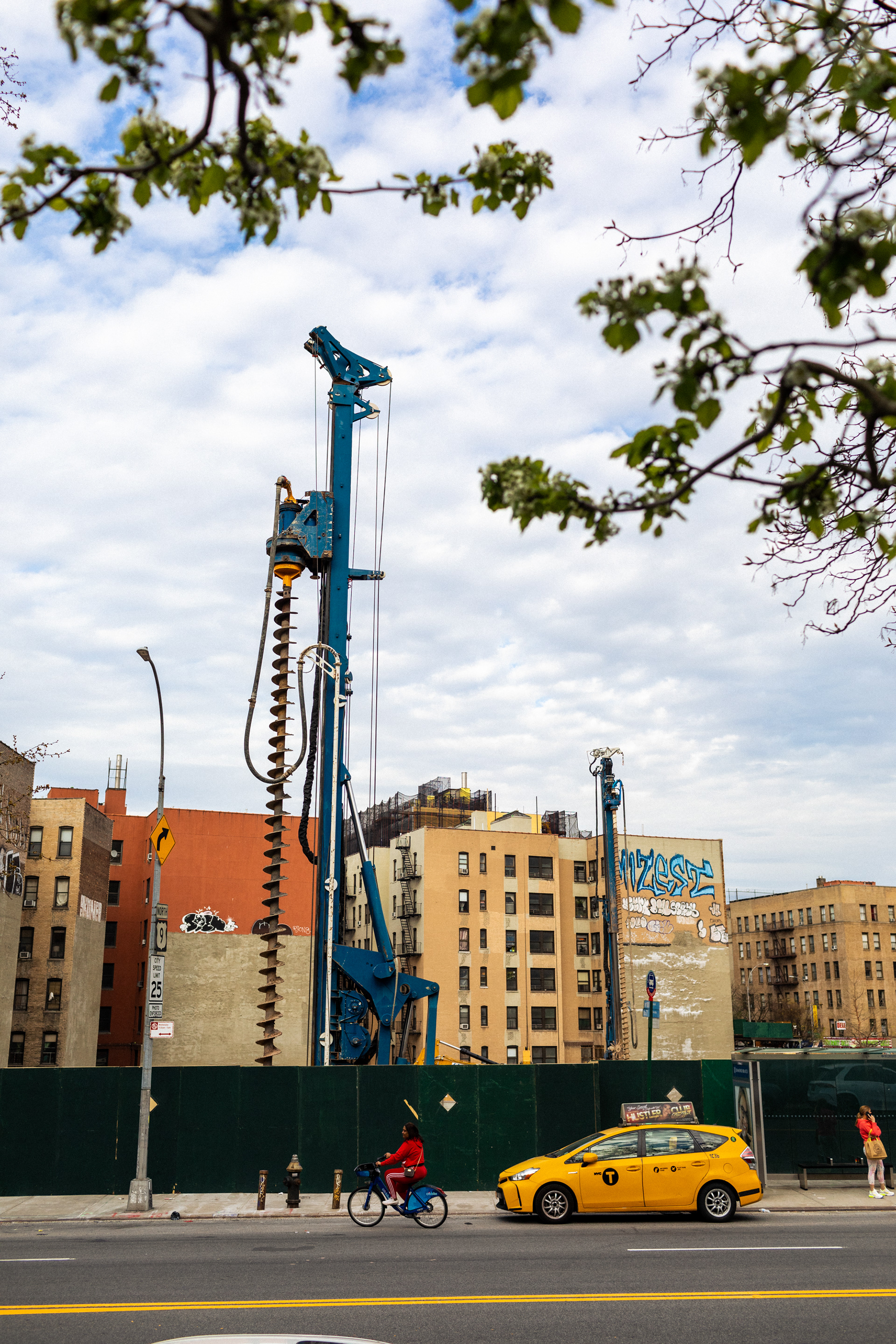
The rezoned lot at 4650Broadway overlooking Ft. Tryon Park. This building was originally planned to be 11 stories, but by promising a grocery store for its bottom three floors, was able to use the city’s FRESH program to increase it to 14 stories.
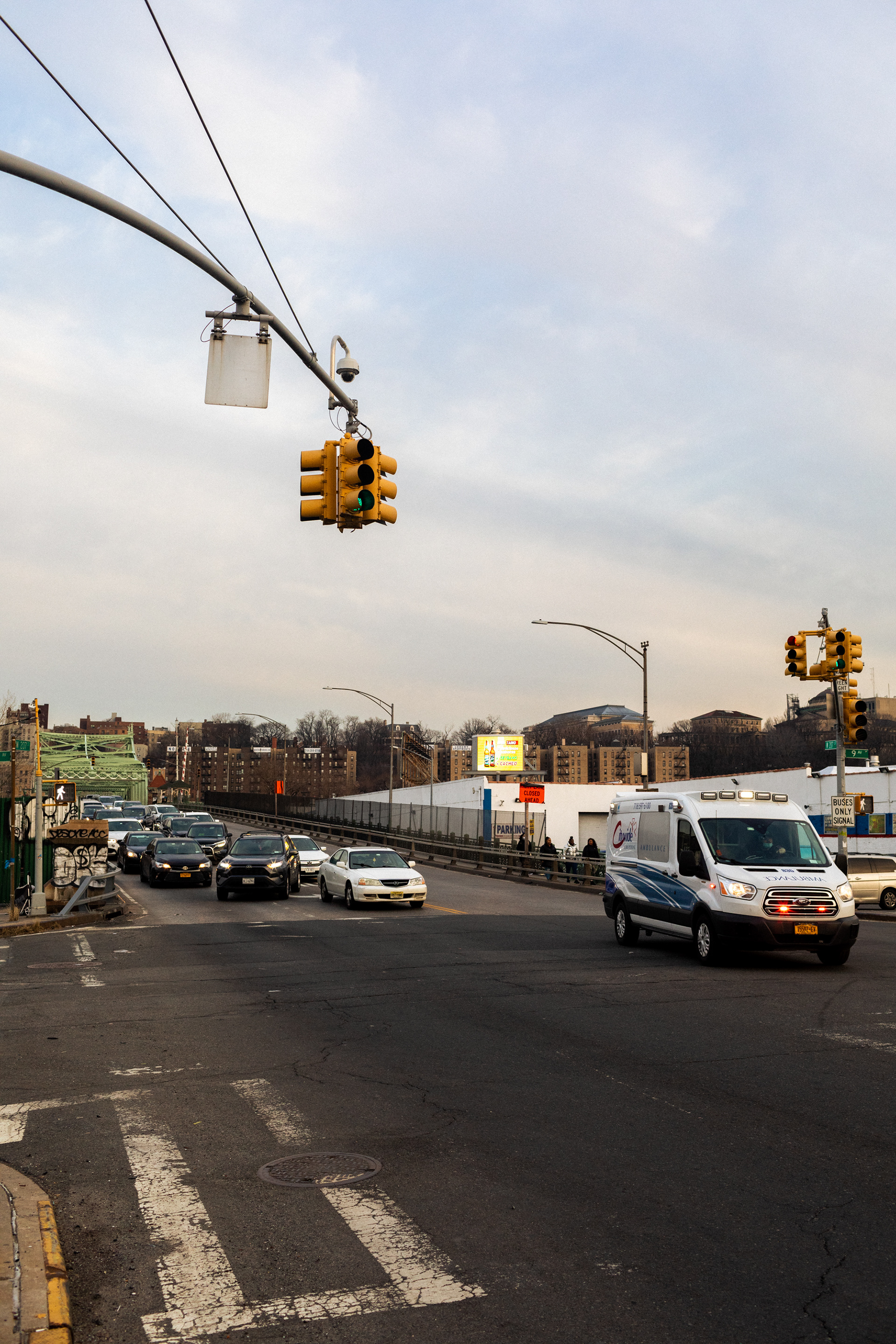
The entrance to 207th Street in Inwood from the University Heights Bridge. UUP is concerned that adding thousands of new residents will create traffic jams at choke points like these. The other two choke points are at the Dyckman, Broadway, Riverside intersection and the Broadway Bridge.
The UUP also called for all new housing to be affordable, an increase in city services, and contextually rezone areas so that new construction would keep heights similar to Inwood's current buildings, which are typically between 6-8 stories.
The proposal goes on to state its intention to “balance our community’s needs to preserve existing housing, create new and deeply affordable housing, protect small businesses, and address infrastructural deficiencies before any population increase occurs.”
The city amended portions of its proposal, most of which was removing rezoning of the areas within the borders of Dyckman, 207th Street, Nagle, and Broadway called the “Commercial U.”
But that was little concession for the UUP, as the Inwood Library’s public lot on Broadway near Dyckman Street remained in the rezoning plan. Last year, the city demolished the library to begin reconstructing it into a 14-story building. Called “The Eliza,” it will contain the reconstructed library, community center, and affordable housing. When the construction of The Eliza is completed in 2023, the library portion will have expanded by 2,000 more square footage—about 10 percent—which some consider insufficient to serve the needs of additional residents.
“Our community is left without a viable library for my kids' formative years,” said Inwood resident Allegra LeGrande who got involved in the fight for a community-oriented rezoning plan because of the library’s demolition.
The city moved the library to a temporary space down the street, where it fills an area a little larger than a modest Inwood apartment. “We have a shell of a library,” said LeGrande.
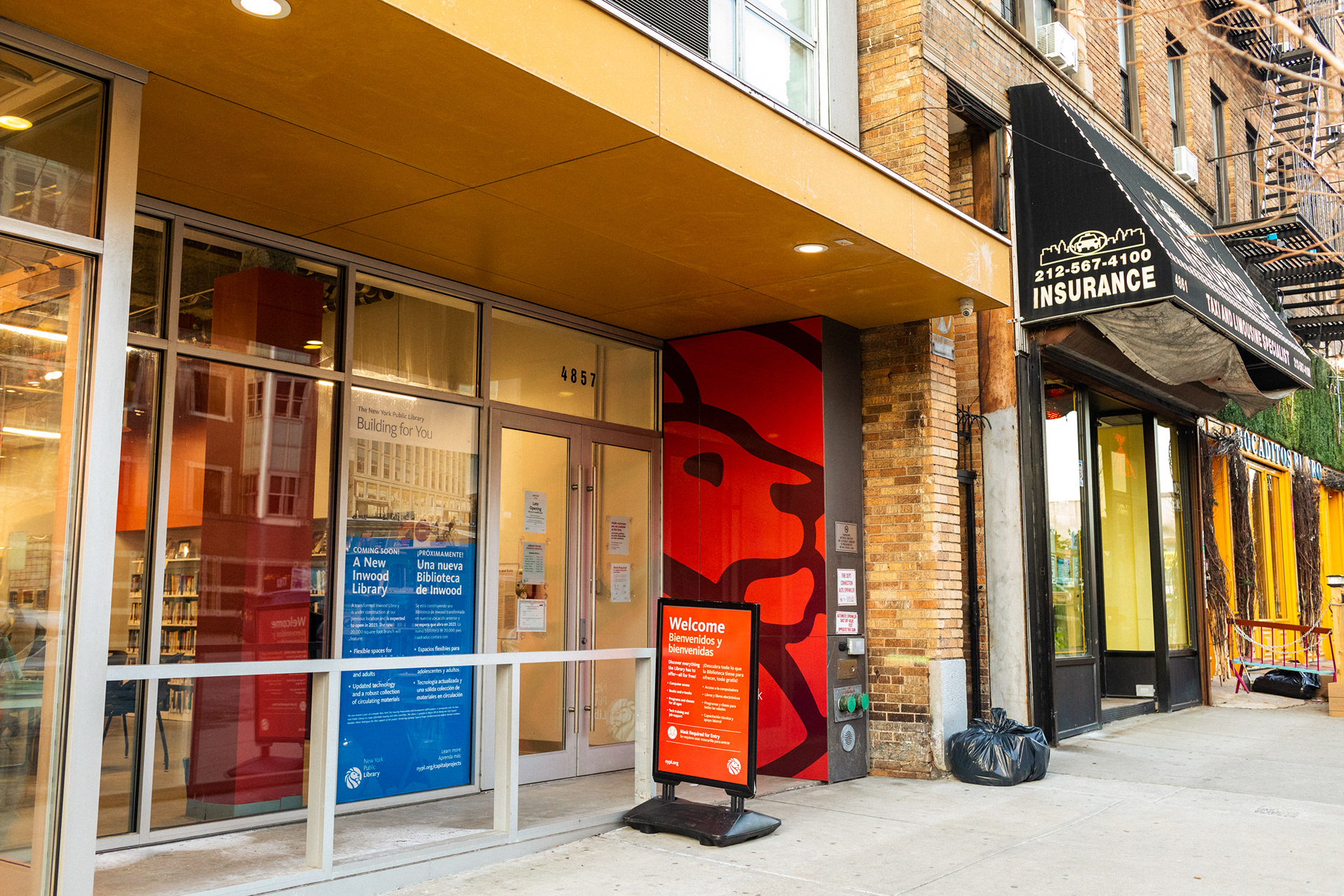
The temporary site of the Inwood Public Library.
The strip along 10th Avenue north of Dyckman Street will also see significant changes. It’s a mix of on-street car servicing businesses and auto body shops. Little has changed since it was zoned for automotive businesses in the mid-20th century, but now that the city has rezoned the entire area, some landlords have already sold the property, while others wait for the right bid.
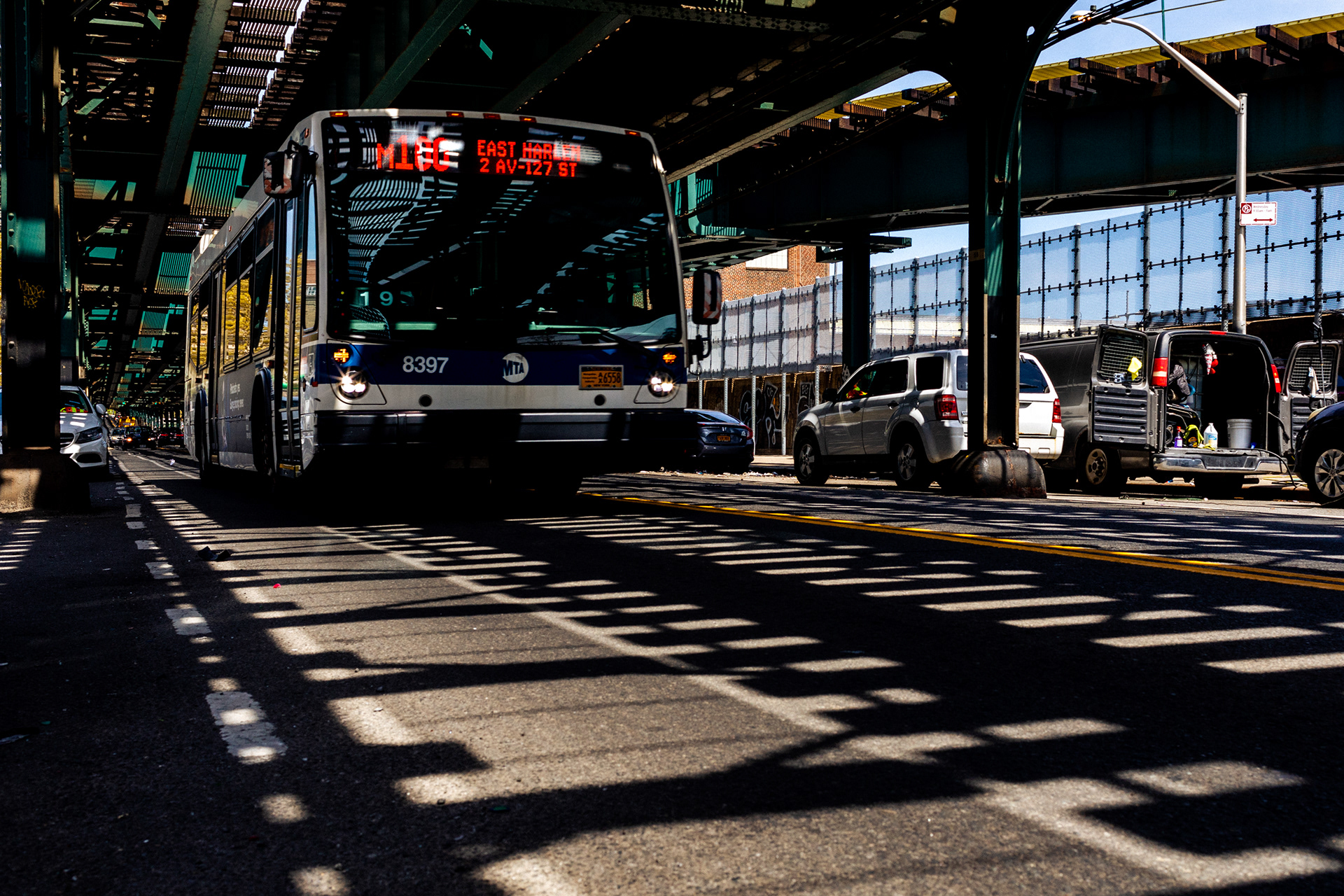
The 10th Avenue corridor features car servicing shops along its roadside, as seen on the right. It’s unclear if these businesses will be able to continue to operate.
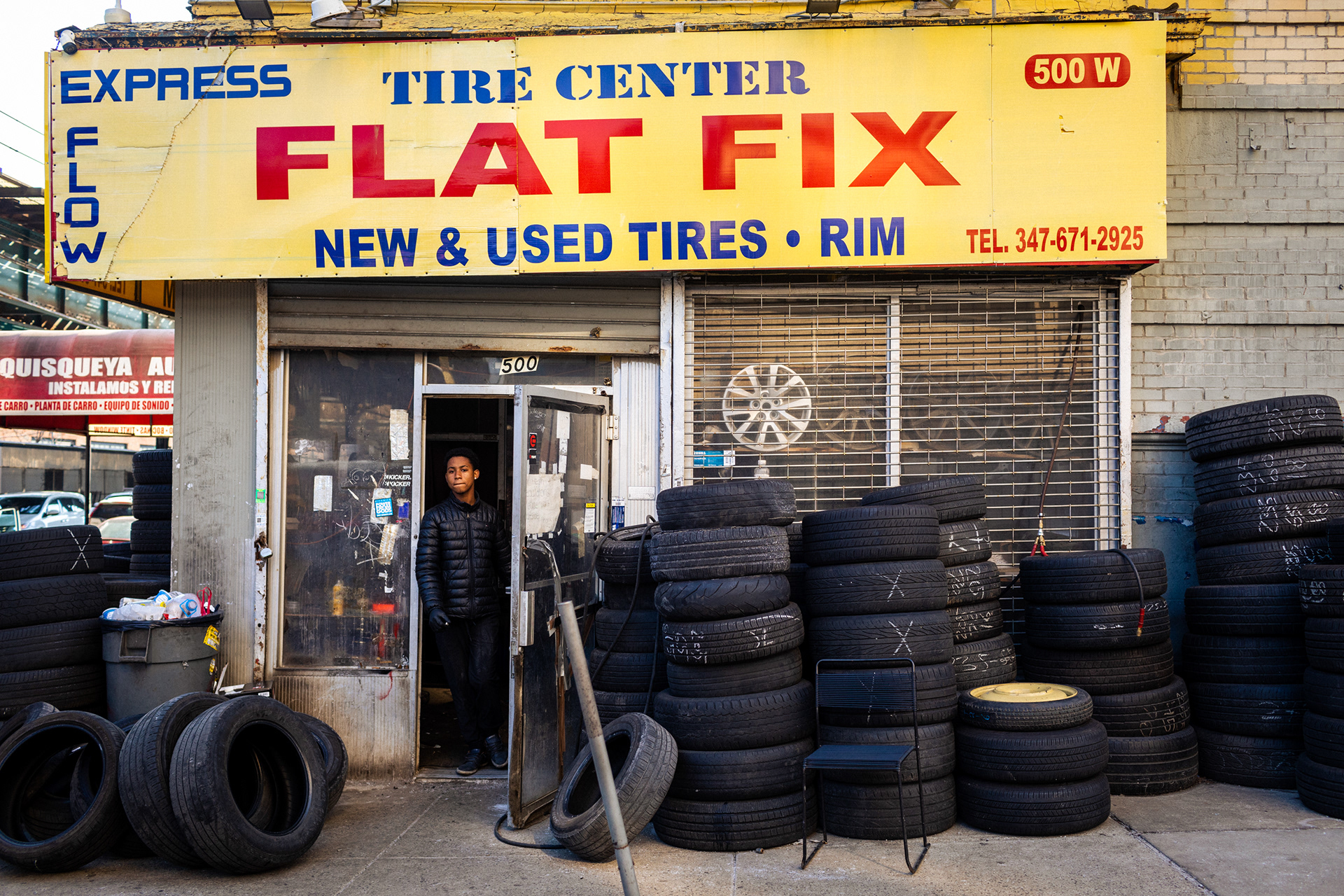
Flow’s Flat Fix is one of the many automobile businesses along 10th Avenue.
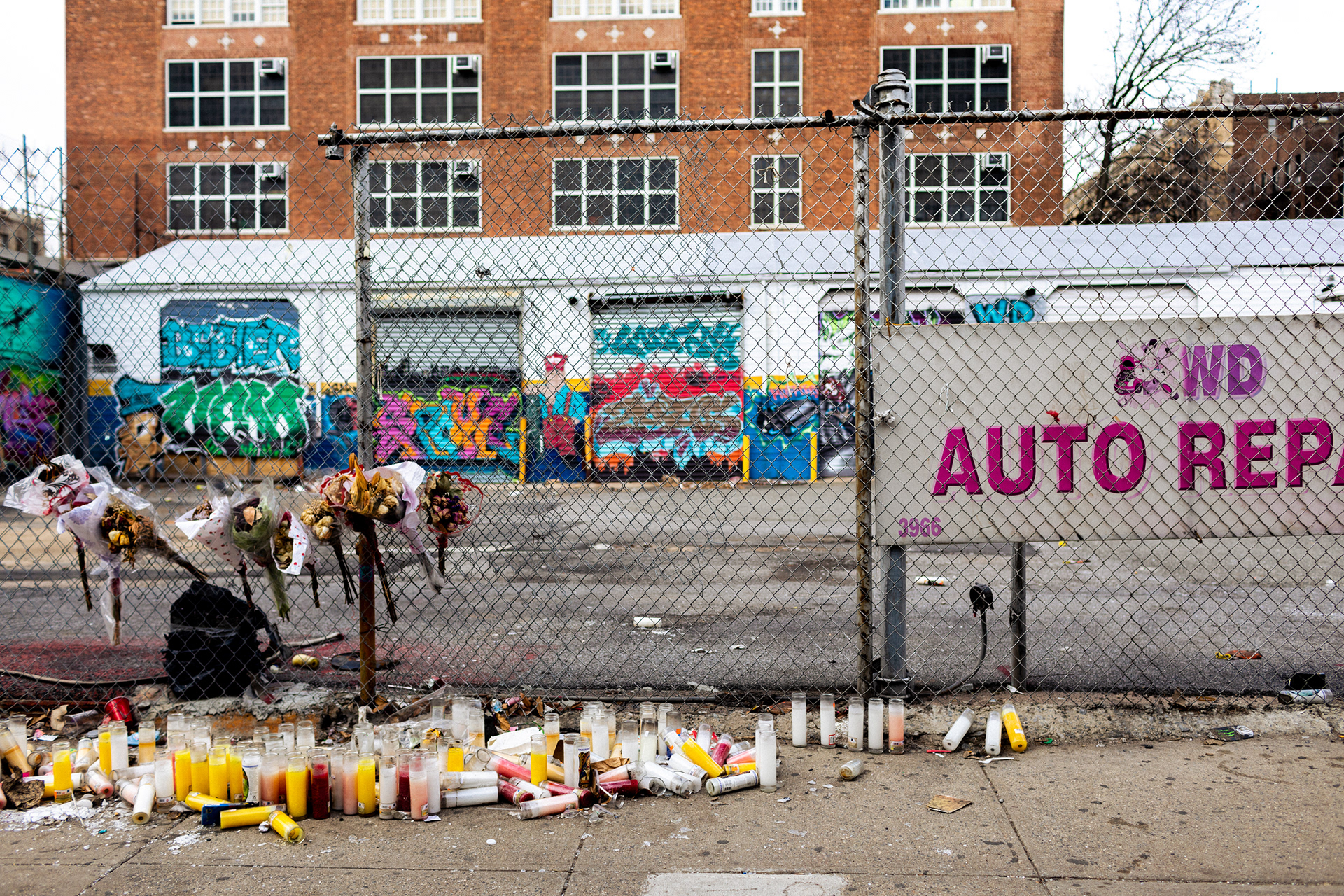
The former site of WD Auto Repair. Set up is a memorial for a man named Victor, which was partially destroyed by heavy wind. This site was an indigenous and African burial ground and will turn into a shelter for men who are homeless. The shelter has planned to have a section for reflection of those who were once buried here.
Rafael Velazquez became a part-owner of the J & M General Auto Repair ten years ago. The auto shop has been open for 40 years, Velazquez said. It employs about a dozen mechanics. Now that the city has upzoned the lot, increasing its value. Despite having it’s only a matter of time before Velazquez's landlord decides to sell, “if I have to do that, it’s OK,” Velazquez said.
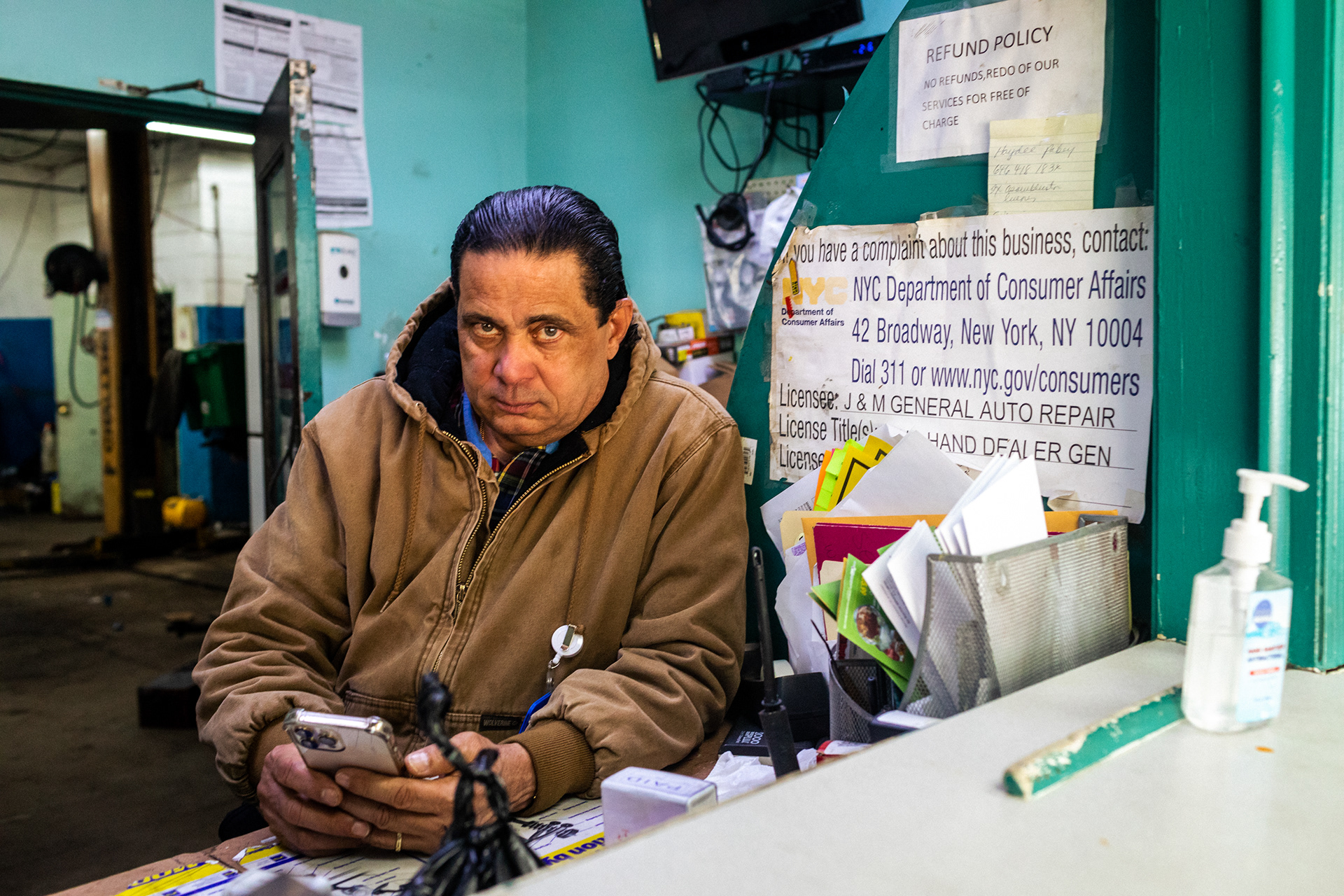
Rafael Velazquez has co-owned J&M General Auto Repair Mechanics at J&M General Auto for ten years. He still has 12 years of 20 left on his current Repair work on a luxury car. lease
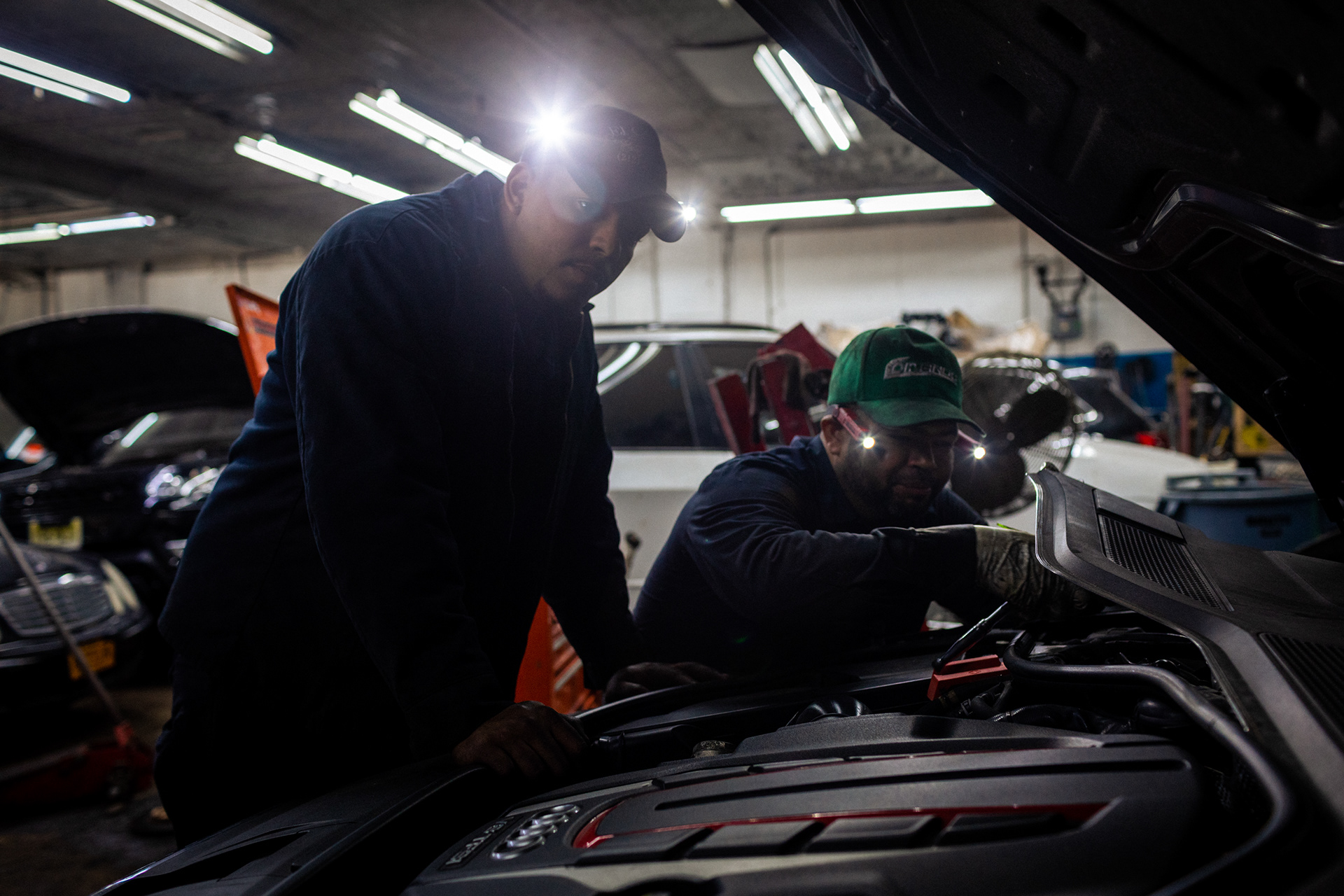
Mechanics at J&M General Auto
As residents and businesses face displacement, current community members also express concern about the neighborhood’s ability to provide essential services to the incoming residents.
“They may have missed an opportunity to do positive things,” said Thom about the city’s rezoning plan, which he said may have insufficient public resources for an increased population. “You have a neighborhood with no new green space, schools, or police.”
East of 10th Avenue, developers have started building high-rises at the intersection of 207th Street and 9th Avenue. Taconic Partners bought the southwest lot in 2015, and after the city formally rezoned the area, Taconic demolished a supermarket to make space for a mixed-use building of a to-be-determined height. On the northeast lot, MADD Equities is constructing a 30- story building with 100 percent affordable housing.
Bobby Fish has sold ceviche using his Puerto Rican grandmother’s recipe from a spot on the north side of 207th Street 9th Avenue for 48 years. He’s got mixed feelings about the area’s rezoning“It could be good. Maybe I’ll open a new business,” he said about the development, “I’m not sure I’ll be able to afford it.”
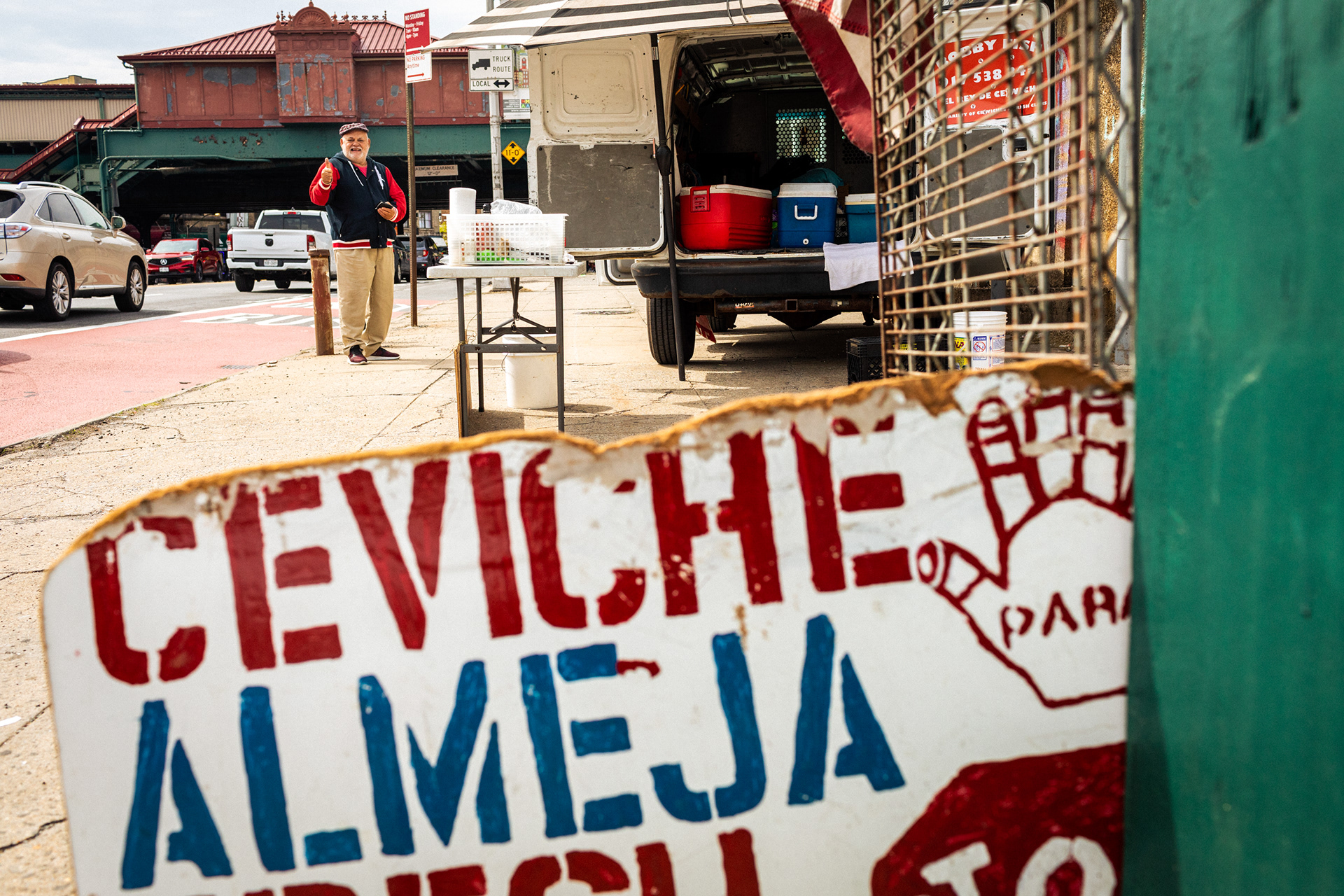
Bobby Fish’s location is on 207th Street and 10th Avenue. He works only during the summers. Several cars yelled out they love him, which he yelled back each time.
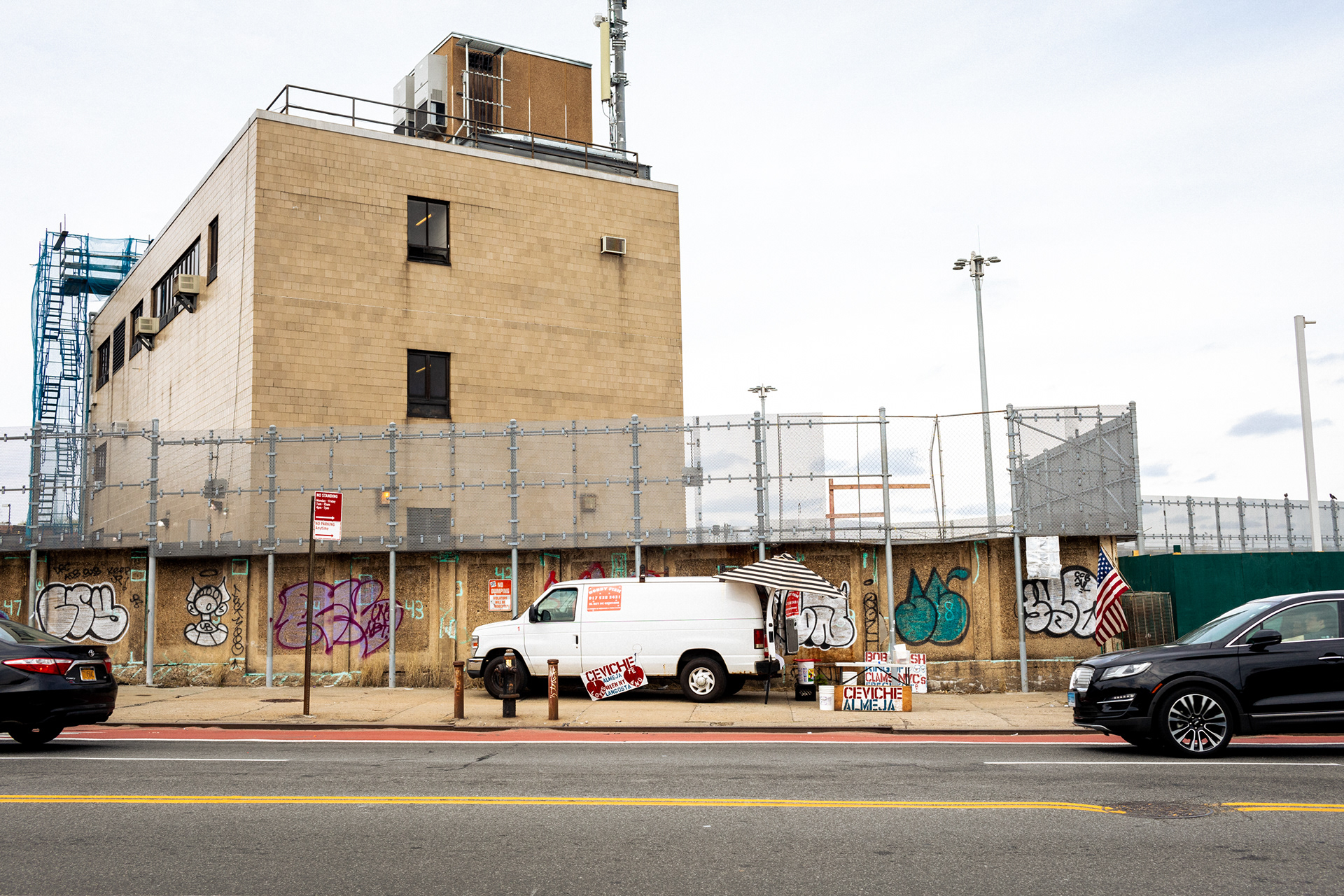
Fish, who is in his seventies, retired after owning a deli downtown and a restaurant on 206th and 9th Avenue. He said he’s also feeling some financial pressure as his landlord raises his Inwood apartment on Vermilyea. “Rich people don’t care about the poor man,” Fish said.
Inwood’s legal fight for community-focused rezoning may have failed, but its demand for the city to review the racial impact of rezoning helped lay the foundation for future rezoning efforts.
In July 2021, the city passed legislation Intro 1572-B, which requires developers of all large-scale rezoning plans in New York City to complete a racial impact study that determines the potential displacement effects of rezoning neighborhoods. This was partially a result of collaboration with the Racial Impact Study Coalition, a project with organizations like the Association for Neighborhood and Urban Housing, Inwood Legal Action, and others.
Earlier this year, the city made available the “Equitable Development Data Explorer,” which aggregates data on things pertaining to economic security and quality of life to project scenarios and displacement risks in communities in rezoning plans. Before now, it was difficult for researchers to easily access this data.
“The city never evaluated the displacement risk for these protected groups of people. We wanted to see if we could do that at the local level,” said Cheryl Pahaham, co-chair of Inwood Legal Action and a member of NMNFS. Pahaham also worked with the Racial Impact Study Coalition.
The law doesn’t go into effect until June 2022, but the study may generate data that will be critical to understanding the racial impact of rezoning in neighborhoods like Chinatown and the Lower East Side that seem poised for that process.
“It gives us the leverage to hold our council members accountable,” said Cheryl Pahaham.
At a recent land use committee meeting for Community Board 12, which represents Inwood and Washington Heights, the emphasis on holding public officials accountable was present. During a discussion about rezoning a stretch of Broadway in the Heights, several community members spoke up to ensure the committee considered the rezoning’s potential impact. Many of those who spoke cited their work with the Inwood rezoning opposition.
“It’s still on us to act,” said Pahaham, “that doesn’t change.”